Independent information service
This guide compiles information from official government publications, the Energy Saving Trust, OZEV, and charger manufacturer specifications. We are not electricians or chargepoint installers. Always use an OZEV-approved installer for safe, compliant installation.
Why Install a Home EV Charger?
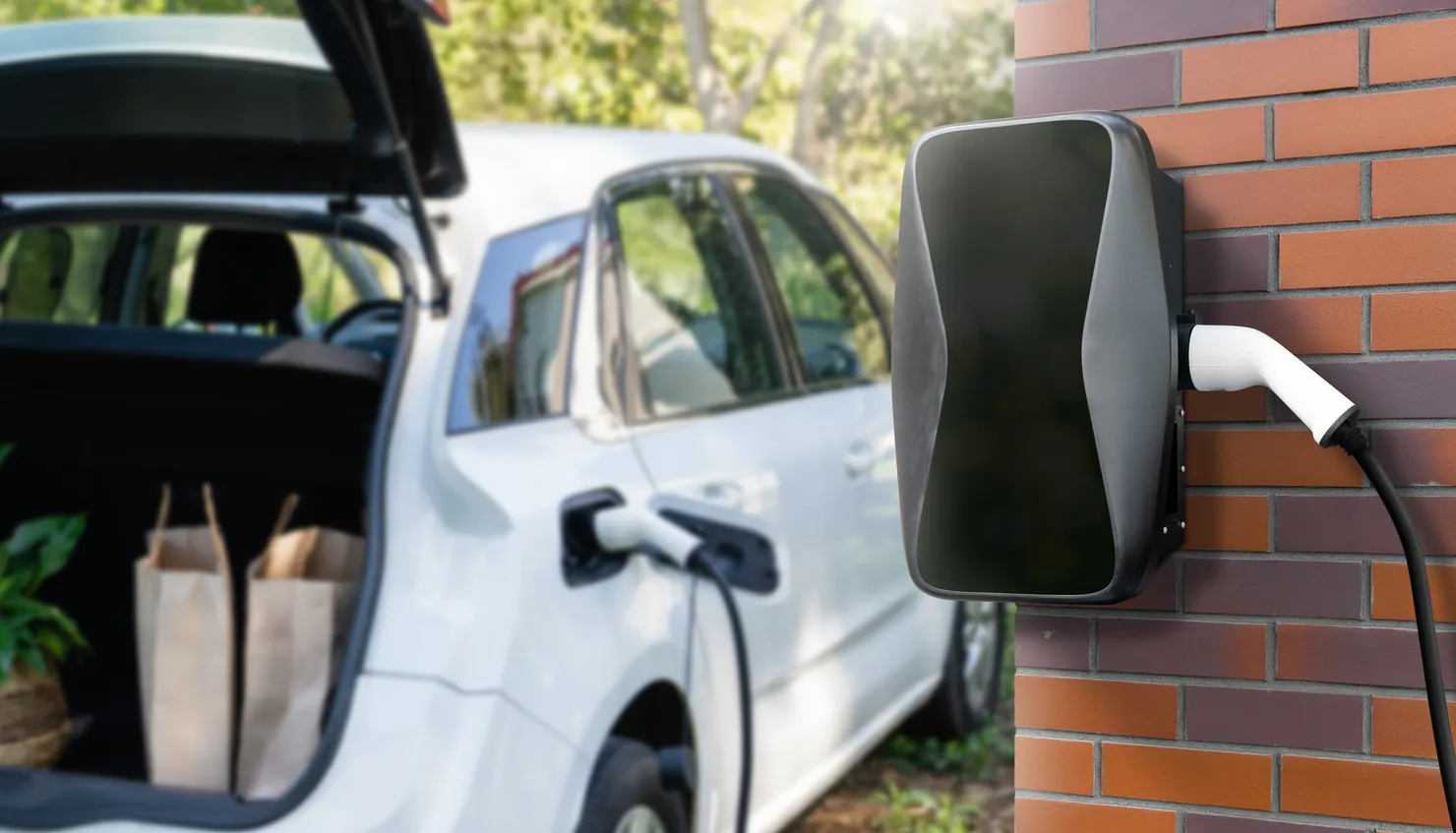
According to the Energy Saving Trust, over 80% of EV charging in the UK happens at home. A dedicated home charger — also known as a wallbox — is significantly faster and safer than using a standard three-pin plug, which is only recommended for emergency top-ups.
A typical 7kW home charger can fully charge most electric vehicles overnight, providing a convenient daily routine: plug in when you arrive home, wake up to a full battery. According to Pod Point, home charging can cost as little as 2-3p per mile compared to 14-18p per mile for petrol vehicles.
Smart chargers — now required by UK building regulations for new installations — allow you to schedule charging for off-peak hours, track energy usage, and even integrate with solar panels for free daytime charging.
Key benefits of home EV charging
Faster than a plug
According to charger manufacturers, a 7kW wallbox charges up to 7 times faster than a standard 3-pin socket.
Per mile cost
According to Pod Point, home EV charging costs a fraction of petrol fuelling.
Zero tailpipe emissions
Pair with a renewable electricity tariff or solar panels for genuinely zero-carbon driving.
Types of Home EV Charger
Tethered vs untethered
Cable attached
Tethered
The charging cable is permanently fixed to the unit. Simply grab the cable and plug into your vehicle — no separate cable to store or carry.
- Maximum convenience — plug in and go
- No cable to store separately
- Best for single-vehicle households
Socket only
Untethered
The unit has a socket — you bring your own cable. Offers flexibility to use different cables for different vehicles or connector types.
- Use different cables for different vehicles
- Neater appearance when not charging
- Best for multi-vehicle or future-proof setups
Charging speeds compared
| Charger type | Power | Typical charge time (60kWh) | Best for |
|---|---|---|---|
| 3-pin plug (slow) | 2.3kW | ~26 hours | Emergency top-ups only |
| 3.6kW wallbox | 3.6kW | ~17 hours | Older properties with limited supply |
| 7kW wallbox (most popular) | 7kW | ~8.5 hours | Most UK homes (single-phase) |
| 22kW wallbox | 22kW | ~3 hours | Three-phase supply homes only |
Charge times are estimates based on a 60kWh battery charged from empty. According to the Energy Saving Trust, most UK homes have a single-phase electricity supply, making 7kW the maximum practical home charging speed.
Installation requirements
Parking
Off-street parking
A driveway, garage, or designated parking space is the usual setup, with the charger mounted on a wall or post within cable reach of where you park. With on-street parking only, the cable must cross the pavement through a permanent solution your local highways authority has approved.
Electrical
Dedicated circuit
According to IET wiring regulations, EV chargers require a dedicated circuit from your consumer unit with appropriate circuit protection. Your installer will assess your existing electrical capacity.
Regulation
Smart functionality
Since June 2022, according to UK building regulations, all new home charger installations must be smart chargers capable of scheduled charging and load management.
Smart charging features
Scheduling
Scheduled charging
Set your charger to start automatically during off-peak hours. According to Octopus Energy, their Intelligent Go tariff offers rates as low as 7p per kWh overnight, compared to the Ofgem cap rate of 26.32p.
Solar
Solar integration
According to solar industry sources, pairing an EV charger with solar panels allows free daytime charging. Some smart chargers like the Zappi offer solar diversion modes that automatically use surplus solar generation.
Connected
App control & monitoring
Monitor charging sessions, track energy usage, set charging limits, and receive notifications — all from your smartphone. Most smart chargers include a companion app as standard.
Safety
Load balancing
Smart chargers can monitor your home's total electricity usage and automatically adjust the charging rate to avoid overloading your supply — particularly important during peak household demand.
How much does a home EV charger cost?
According to industry estimates compiled from installer websites and charger manufacturers, a home EV charger typically costs between £800 and £1,500 fully installed:
Hardware
Charger unit
Depending on brand, features, and whether tethered or untethered. According to manufacturer pricing.
Labour
Installation
Varies by cable run length, consumer unit capacity, and site accessibility. According to installer estimates.
Total
Total installed
Typical range for a 7kW smart charger with standard installation. According to industry estimates.
Get EV charger installation quotes
Connect with OZEV-approved installers in your area for competitive quotes on home EV charger installation.
Energy Pages connects you with one matched OZEV-approved installer in your area. Never a list. No obligation.
EV charger installation process
Site survey
An OZEV-approved installer assesses your electrical supply, parking location, and cable route to provide an accurate quote.
Choose your charger
Select a charger based on your needs — tethered or untethered, standard or solar-compatible. Your installer will recommend options.
Installation day
Professional installation typically takes 2–4 hours. Includes mounting, wiring to your consumer unit, and testing.
Start charging
Set up the smartphone app, configure your charging schedule for off-peak rates, and start saving on fuel costs immediately.
Pre-install check
Electrical Installation Condition Report (EICR)
Older properties may need an EICR before a charger install — the electrician will check the consumer unit can safely handle the additional load. Landlords are legally required to have a current EICR (every 5 years) for every rental property. Order a standalone EICR online and have a qualified electrician complete it within a few days.
- EICR for homeowners and landlords
- NICEIC or NAPIT registered electrician
- Order online, fixed price, completed within days
Via energyperformancecertificates.co.uk
Affiliate link — Energy Pages may earn a commission if you buy through it, at no extra cost to you.
Related guides
£350 grant
OZEV Grant
Get up to £350 off your EV charger installation — check eligibility and how to apply.
Read guide →Renewable
Solar panels guide
Charge your EV from solar panels — free daytime charging and zero-carbon driving.
Read guide →Storage
Battery storage guide
Store energy in a home battery and use it for overnight EV charging at zero grid cost.
Read guide →Ready to install a home EV charger?
Get competitive quotes from OZEV-approved installers in your area. Professional installation in as little as one day.