Information notice
This guide compiles information from official government publications, the Energy Saving Trust, and industry sources. We are an independent information service, not solar installers. Always consult MCS-certified installers for technical advice specific to your property.
How Do Solar Panels Work?
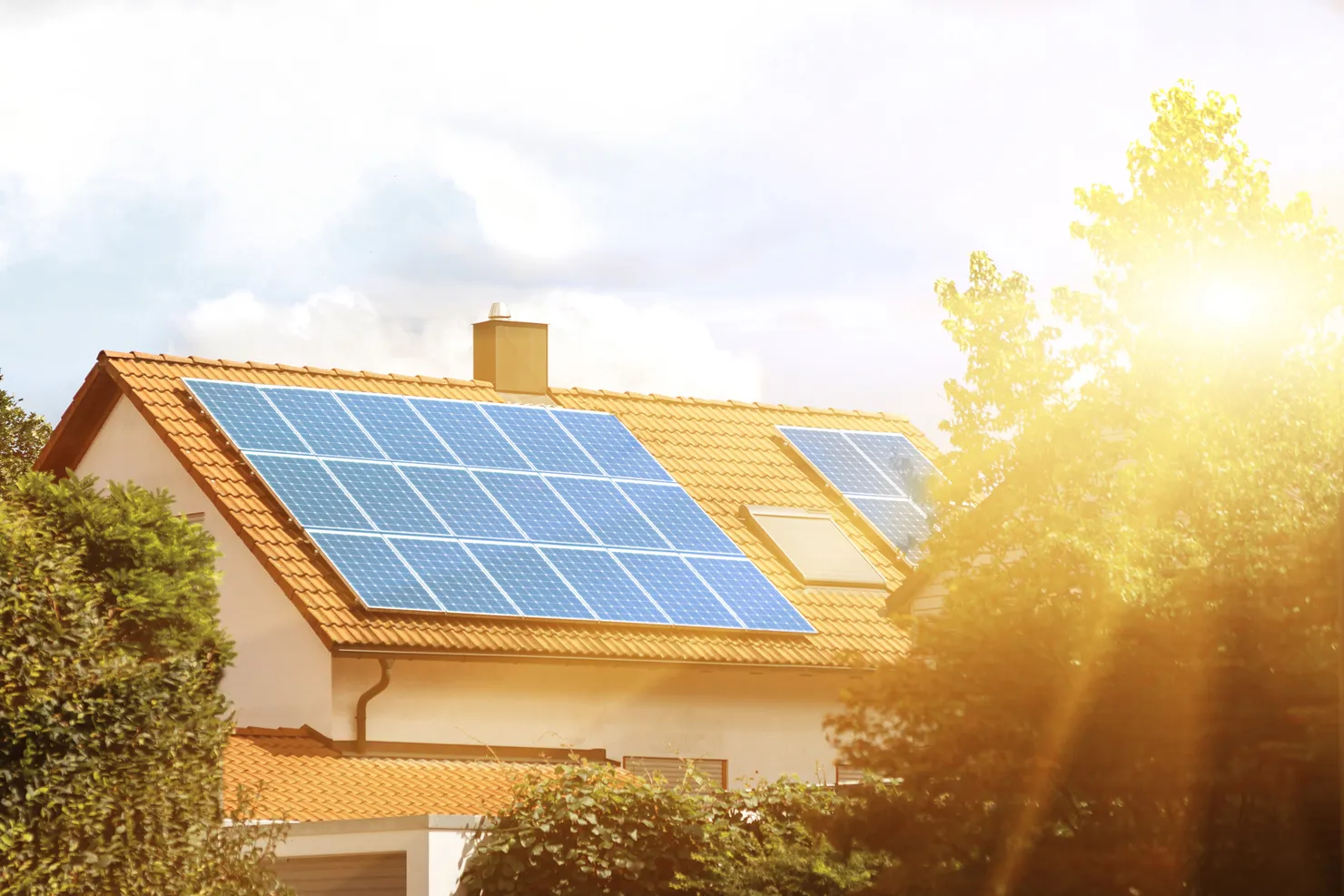
According to the Energy Saving Trust, solar photovoltaic (PV) panels convert sunlight into electricity using semiconductor cells. When photons from sunlight strike these cells, they knock electrons loose, creating an electrical current.
The panels generate direct current (DC) electricity, which an inverter converts to alternating current (AC) for use in your home. Any surplus electricity can be exported to the National Grid, earning you payments through the Smart Export Guarantee.
Solar panels work even on cloudy days, though they generate more electricity in direct sunlight. According to industry data, UK solar panels typically generate electricity for around 1,000-1,100 hours per year, depending on location and orientation.
Key benefits of solar panels
kWh
Generate your own electricity
According to the Energy Saving Trust, a typical 4kW system can generate a significant portion of a household's annual electricity needs.
SEG
Get paid for surplus
The Smart Export Guarantee pays you for electricity exported to the grid (source: Ofgem).
CO₂
Reduce carbon emissions
According to the Energy Saving Trust, solar panels significantly reduce your household carbon footprint.
Types of Solar Panels
Type M
Monocrystalline
Made from a single silicon crystal. According to manufacturers, these offer the highest efficiency rates, typically 20-22%.
- Highest efficiency (20-22%)
- Best for limited roof space
- 25-30 year performance warranties
- Higher upfront cost per panel
Type P
Polycrystalline
Made from multiple silicon crystals. According to industry data, these offer a balance of efficiency and affordability, typically 15-17%.
- Good efficiency (15-17%)
- More affordable per panel
- Slightly larger for same output
- Good option for larger roofs
Type T
Thin-film
Made by depositing thin photovoltaic layers onto a substrate. According to manufacturers, these are flexible and lightweight, with efficiency of 10-13%.
- Flexible and lightweight
- Works in partial shade
- Lower efficiency (10-13%)
- Less common for residential use
Typical Solar Panel Costs
Residential system costs (before VAT savings)
According to industry surveys and installer pricing data, typical residential solar panel system costs in 2026 are as follows. Note that solar panel installations for residential properties currently attract 0% VAT (source: HMRC).
Small system
3kW
Suitable for smaller households with lower electricity usage. Typically 8-10 panels.
Medium system
4kW
Most popular size for UK homes. Typically 10-14 panels, depending on wattage — work out how many you need.
Large system
5–6kW
For larger homes or those with higher electricity consumption. 14-20 panels.
Check your solar panel eligibility
Some households may qualify for subsidised solar panel installation through government schemes. Check your eligibility.
Key eligibility factors:
- Open now — the installation must be completed by 31 December 2026
- England, Scotland or Wales (not Northern Ireland)
- On a qualifying benefit, in social housing rated EPC E–G, or referred through ECO4 Flex by a council that takes part
- Eligibility is not a guarantee — suppliers decide which measures they fund
Check your property against the live MHCLG EPC register to see your current band and the schemes you may qualify for — free, in under a minute.
Check your propertyGet free solar panel quotes
Connect with MCS-certified solar installers in your area for accurate quotes based on your property and energy usage.
Energy Pages connects you with one matched MCS-certified solar installer. Never a list. No obligation.
Solar Panel Installation Process
Site survey
An MCS-certified installer assesses your roof orientation, shading, structural suitability, and electricity usage.
System design
The installer designs a system tailored to your roof and energy needs, specifying panel count, inverter type, and layout.
Installation
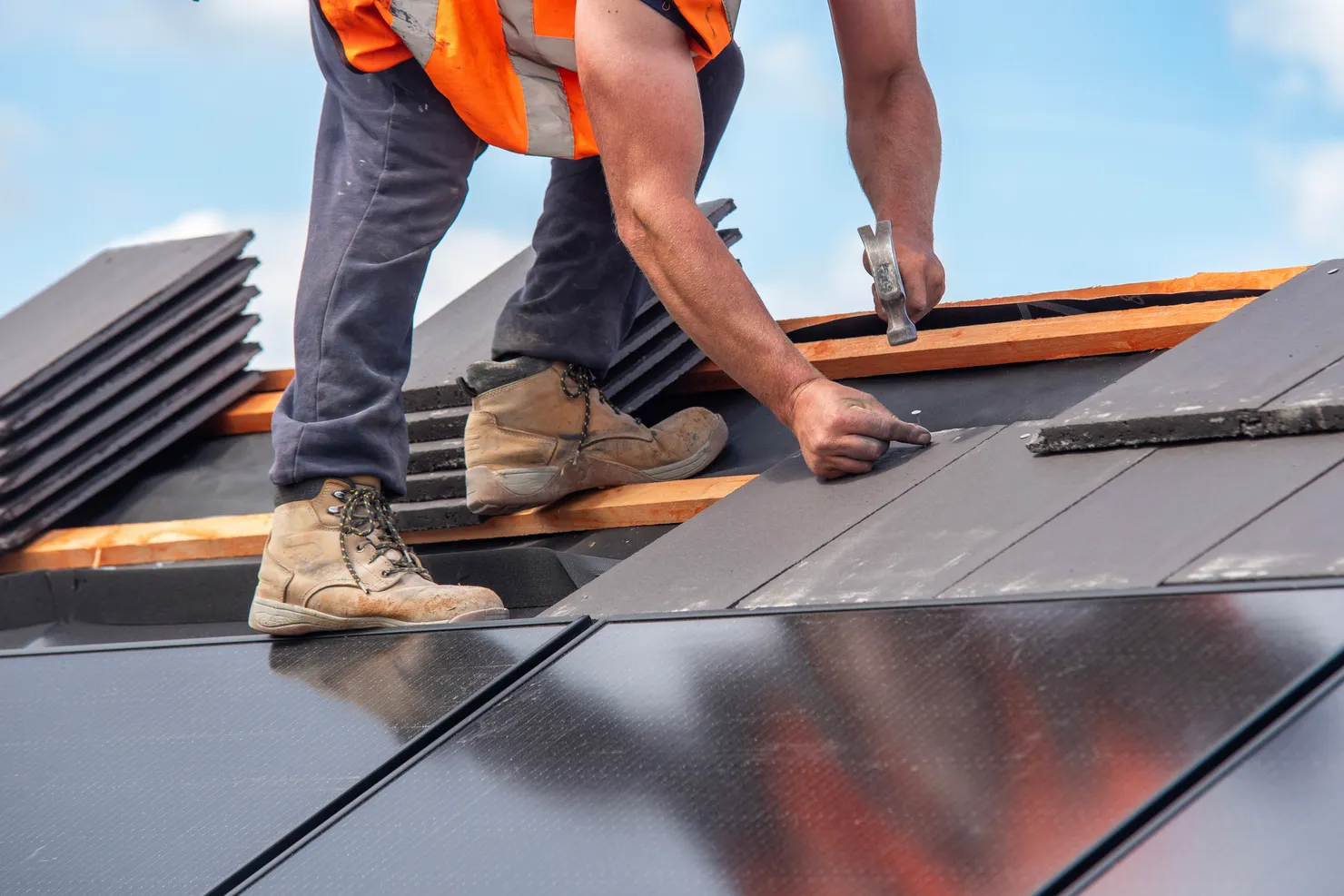
According to installers, a typical residential system takes one to two days to install, including scaffolding and electrical work.
Registration
Your installer registers the system with MCS and your energy supplier for Smart Export Guarantee payments.
Related guides
Sizing
How many solar panels do I need?
Work back from your own electricity use and roof space to the array size that fits, before anyone quotes you one.
Read guide →Costs
Solar panel costs
Detailed cost breakdown by system size, with payback period analysis.
See costs →Grants
Solar panel grants
Available funding and financial incentives for solar installation in 2026.
Check grants →Storage
Battery storage
Store your solar energy and use it at night to maximise self-consumption.
Read guide →Installers
The best solar installers in the UK
National firms ranked on their Trustpilot score, each checked on the MCS register and at Companies House. The method is published and no firm pays for a place.
See the ranking →Warranties
Solar warranties explained
Product, performance, and workmanship warranties — what to check before you sign.
Read guide →Batteries
Home battery systems
In-depth guide to battery storage technology, capacities, and the best systems for pairing with solar.
Read guide →England only
Warm Homes Plan
Whole-home upgrades through the Warm Homes: Local Grant, England only. The two £16,600 figures are per-home cost caps averaged across a council's project, not cash a household receives. Solar may be part of the package where the council agrees it.
Read guide →EPC
Improve your EPC rating
Solar panels can improve your EPC rating by several bands. See how to boost your property's energy performance.
Read guide →Ready to go solar?
Get quotes from MCS-certified installers and start generating your own clean electricity.