Independent information
This is an independent information service. Cost estimates are compiled from Energy Saving Trust publications and industry data. Actual costs depend on your property's size, condition, and location. Planning permission requirements vary by local authority. Always consult a qualified surveyor and your local planning department before proceeding.
What Is Solid Wall Insulation?
According to the Energy Saving Trust, solid walls let through almost twice as much heat as unfilled cavity walls. Because there is no gap to fill, insulation must be applied to either the inside or outside surface of the wall.
Which Properties Have Solid Walls?
Most homes built before the 1920s have solid walls. This includes Victorian terraces, Edwardian semis, Georgian townhouses, and many older cottages and farmhouses. You can identify solid walls by the brickwork pattern — alternating headers (short ends) and stretchers (long sides) indicate solid construction.
Your EPC report will confirm your wall type. If it lists "solid walls" with no insulation, your property could benefit significantly from solid wall insulation.
Why It Matters
According to the Energy Saving Trust, insulating solid walls in a detached home could save a significant amount on annual heating bills. It also makes your home more comfortable by reducing draughts and cold spots near external walls, and can raise your EPC rating by two or more bands.
Key facts
At a glance
- IWI cost: £4,000–£14,000 according to EST and industry data
- EWI cost: £8,000–£22,000 according to EST and industry data
- Duration: 1–3 weeks depending on method and property size
- EPC impact: Can raise your rating by 2–3 bands
- Funding: Warm Homes: Local Grant (England only) for households that may qualify
Internal vs External: Comparing Your Options
IWI
Internal Wall Insulation
Insulation boards or a stud wall with insulation material are fitted to the inside face of external walls. According to the Energy Saving Trust and industry data, this typically costs between £4,000 and £14,000 depending on property size.
Advantages
- Lower cost than external insulation
- No change to external appearance
- No planning permission usually required
- Can be done room by room
Considerations
- Reduces internal room size (typically 60–100mm per wall)
- Disruption during installation — rooms must be cleared
- Skirting boards, coving, and electrics may need repositioning
- Potential for condensation if not installed correctly
EWI
External Wall Insulation
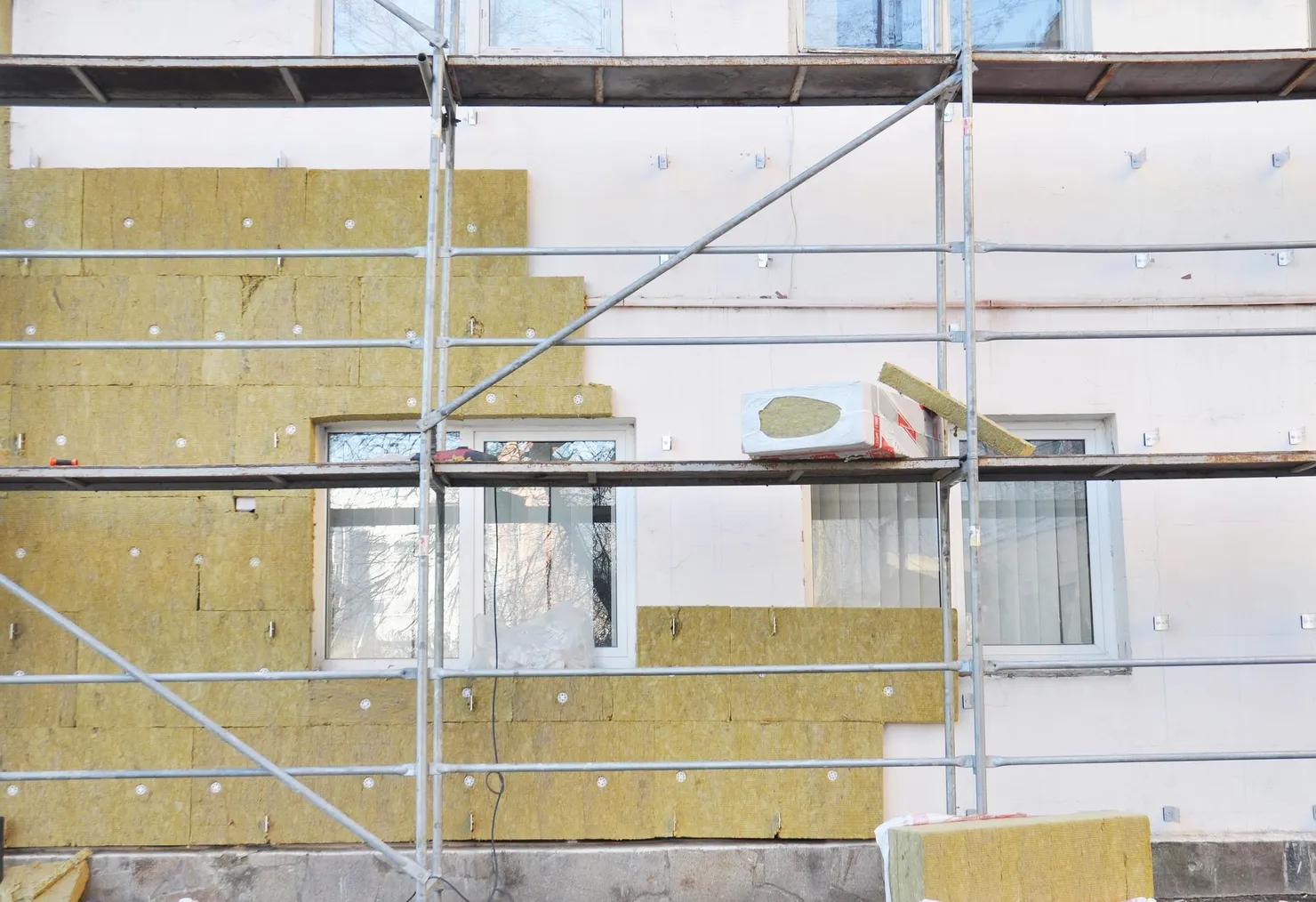
Insulation boards are fixed to the outside of the building and covered with a protective render or cladding. According to the Energy Saving Trust and industry data, this typically costs between £8,000 and £22,000 depending on property size and finish chosen.
Advantages
- More thermally effective — wraps the building completely
- No loss of internal floor space
- No internal disruption during installation
- Protects existing brickwork from weathering
- Can improve the appearance of tired-looking walls
Considerations
- Changes the external appearance of the building
- May require planning permission (see below)
- Not suitable for listed buildings in most cases
- Higher cost than internal insulation
- Requires scaffolding during installation
Planning permission considerations
Do you need permission?
According to gov.uk, internal wall insulation does not usually require planning permission. External wall insulation often falls under permitted development rights, but there are important exceptions:
- Conservation areas: EWI may require permission if it alters the character of the building or streetscape
- Listed buildings: Listed building consent is almost always required for any external changes — and often for internal alterations too
- Flats and maisonettes: Permission is usually needed for external changes to shared buildings
- Boundary considerations: EWI increases the building footprint and could encroach on neighbouring land or public highways
- Article 4 directions: Some areas have additional restrictions that remove permitted development rights
Always check with your local planning authority before commissioning external wall insulation. A reputable installer will advise you on this as part of their assessment.
Which properties benefit most?
Suitable
Good candidates
- Pre-1920s properties with solid brick or stone walls
- Victorian and Edwardian terraces and semis
- Properties with an EPC rating of D, E, F, or G
- Homes with high heating bills and cold internal walls
- Properties where cavity wall insulation is not possible
Caveat
May need special consideration
- Listed buildings (specialist advice essential)
- Properties with existing damp or structural issues
- Homes with decorative brickwork worth preserving (EWI would cover it)
- Very exposed locations with persistent driving rain
- Properties with unusual construction methods
These properties may still benefit, but need a specialist survey to determine the right approach.
Check If You Qualify for Funded Solid Wall Insulation
Solid wall insulation is one of the most expensive energy improvements — but in England the Warm Homes: Local Grant may cover much of the cost for households that qualify. Check which route applies to you.
Key eligibility factors:
- England only — not Wales, Scotland or Northern Ireland
- EPC band D, E, F or G
- Household income of £36,000 a year or less, a qualifying means-tested benefit, or a low-income postcode
- Owner-occupiers and private tenants with the landlord's consent (not social housing) — owner-occupiers and tenants are not expected to contribute anything, and a private landlord gets one home fully funded and pays half the cost on each additional home
- Separate caps for energy performance and low carbon heating, funding a whole-home package of measures — the caps are averaged across a council's whole project, not a sum a household can claim
- Apply on GOV.UK first and you are passed to your council, which decides — some councils have paused while their funding lasts. Greater Manchester and the West Midlands are funded through their combined authorities instead: West Midlands households still apply through the same GOV.UK service, while Greater Manchester households are sent to the GMCA retrofit portal
Check your property against the live MHCLG EPC register to see your current band and the schemes you may qualify for — free, in under a minute.
Check your propertyGet a free solid wall assessment
A qualified surveyor will assess your property, recommend whether internal or external insulation is more suitable, and set out which funding routes may apply to your household.
No obligation. Energy Pages connects you with certified installers in your area.
How to get solid wall insulation
Check eligibility
Use our eligibility checker or contact us. The Warm Homes: Local Grant, which runs in England only, may cover much of the cost for households that qualify, but it is your council that decides.
Professional survey
A surveyor assesses your walls, checks for damp, and recommends internal or external insulation based on your property and circumstances.
Installation
Certified installers carry out the work. IWI is typically done room by room over several days. EWI involves scaffolding and rendering over 1–3 weeks.
Certification
You receive a guarantee and building control sign-off. Your EPC can be updated to reflect the improvement in your energy rating.
Related guides
Grant scheme
GBIS (closed)
Closed 31 March 2026. Kept as a record; in England, the live route for solid wall work is the Warm Homes: Local Grant.
Read guide →Heat pumps
Heat pumps for older homes
Solid-walled properties can still benefit from heat pumps. Insulate first, then upgrade your heating.
Read guide →EPC guide
Improve your EPC rating
Solid wall insulation delivers the biggest EPC improvement of any single measure. See the full list.
Read guide →Ready to insulate your solid walls?
Solid wall insulation is a significant improvement — and in England, households that qualify for the Warm Homes: Local Grant may have the work funded by their council at little or no cost.