Last reviewed: . Figures on this page are taken from the Department for Communities, the NI Housing Executive and the Utility Regulator's NISEP List of Schemes for 2026/27. Scheme rules, income limits and funding availability change — confirm the current position with the official source before you apply.
Why the usual insulation grant advice does not apply here
Energy efficiency and fuel poverty policy is devolved to the Northern Ireland Executive, so the headline UK schemes are written for Great Britain and stop at the Irish Sea. The Great British Insulation Scheme covered England, Scotland and Wales; the "Great British" is literal. It ended on 31 March 2026. ECO4 covers the same three nations and is still running there until 31 December 2026, but it has never reached Northern Ireland.
This matters more for insulation than for any other measure, because insulation is the most-searched form of grant help in Northern Ireland and the GB pages rank well for NI searches. If a site invites you to check your eligibility for ECO4 or the Great British Insulation Scheme at a BT postcode, it has the wrong country, and any figures it quotes are for a scheme you cannot join.
Which scheme funds which measure
Both NI routes fund the same core insulation measures. Which one you use is decided mainly by household income, and after that by whether you fall into a priority group.
| Measure | Affordable Warmth | NISEP |
|---|---|---|
| Loft insulation | Funded | Funded, priority and some non-priority schemes |
| Cavity wall insulation | Funded, subject to survey | Funded, subject to survey |
| Solid wall insulation | Funded — raises the cap to £10,000 | Priority whole-house schemes |
| Draught proofing | Funded | Varies by Scheme Manager |
| Hot water cylinder jacket | Funded | Varies by Scheme Manager |
| Grant level | Up to £7,500 of measures, £10,000 where solid wall insulation is needed | Varies by scheme — 100% on fully funded schemes, 40% up to £650 a measure on part-funded insulation schemes |
| Income test | Under £23,000 gross household income | No single limit — set per scheme |
Apply to the scheme, not for the measure. Both routes survey the property and decide which measures it needs. A household that applies wanting loft insulation may be offered cavity wall work first, or a package covering both. That is the whole-house approach working as designed rather than an application going wrong.
Route one · income under £23,000
The Affordable Warmth Scheme
Northern Ireland's main government energy efficiency grant for lower-income households, funded by the Department for Communities and delivered by the NI Housing Executive. It takes a whole-house, fabric-first approach: insulation is dealt with before heating, on the reasoning that heating a poorly insulated house efficiently still wastes most of the heat.
Who qualifies
- You live in Northern Ireland and own and occupy the home as your main residence, or you rent privately
- Total gross household income is under £23,000 a year — the whole household, before tax
- Not open to Housing Executive or housing association tenants
- The property needs energy efficiency improvements
- Meeting all of these may qualify you but does not guarantee an offer — the Housing Executive states that grants are subject to the availability of funding
The income test catches people out. It is household income, not personal income, so two modest incomes under one roof can cross £23,000 where one would not. If you are over the line, read the NISEP section below rather than assuming there is nothing.
The insulation it pays for
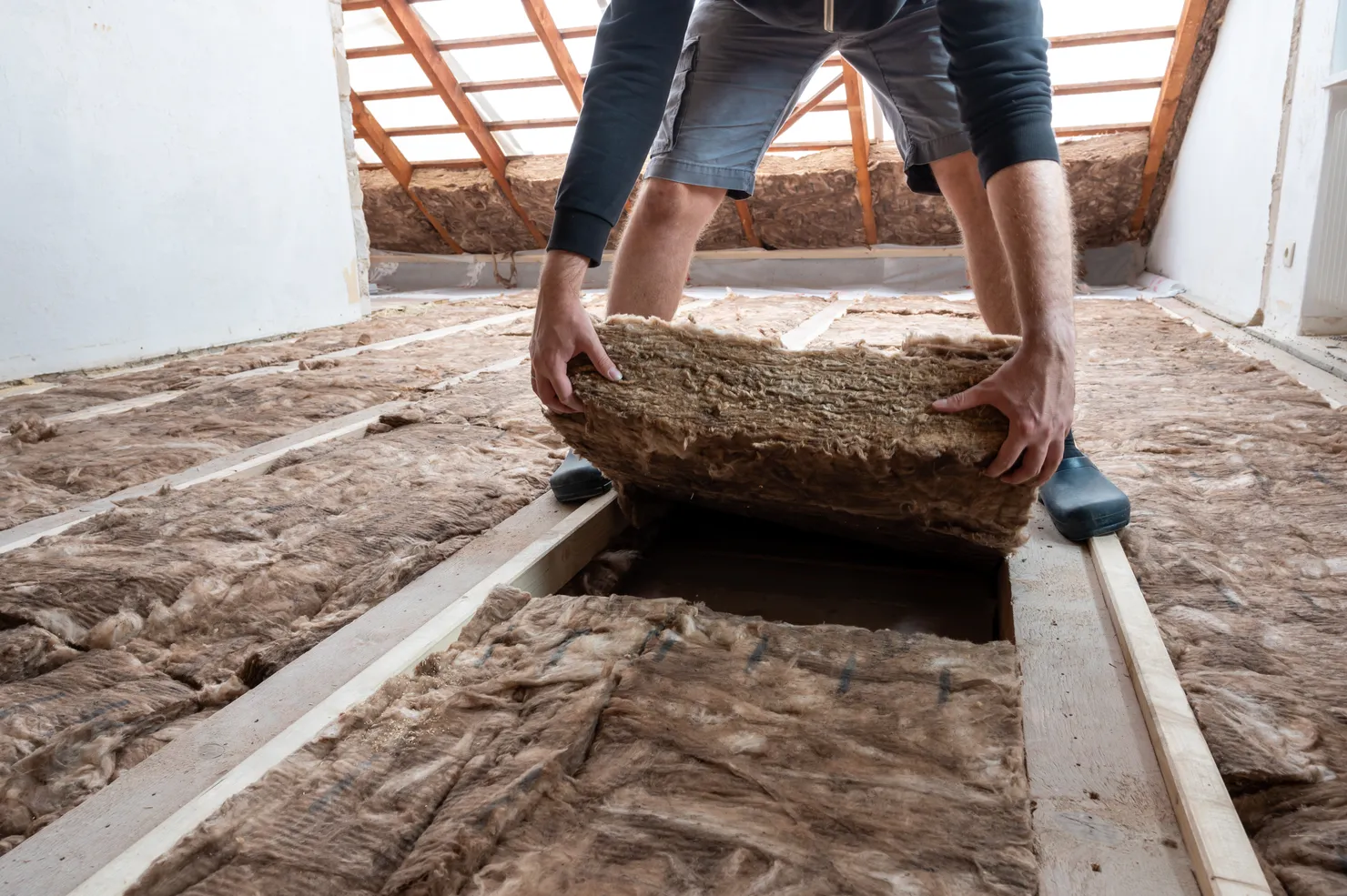
- Loft insulation
- Cavity wall insulation, where the construction is suitable
- Solid wall insulation on detached properties, up to £10,000
- Draught proofing and hot water cylinder jackets
The same grant also covers boiler replacement, central heating conversion and single-glazed window replacement, drawn from the same £7,500. Insulation is not a separate budget.
How to apply
Contact the NI Energy Advice service on 0800 111 44 55 or NIenergyadvice@nihe.gov.uk. Since September 2023 the scheme has been delivered solely by the Housing Executive on an applications basis — local councils no longer administer it, so a council-based route you read about elsewhere is out of date. After an eligibility check you are sent an application form to complete and return with supporting documents. Do not start any work, and do not pay a deposit, until your grant is approved in writing.
Route two · the NI equivalent of ECO and GBIS
NISEP — the Northern Ireland Sustainable Energy Programme
NISEP is funded through a levy on Northern Ireland electricity bills and overseen by the Utility Regulator. It is the closest thing NI has to the ECO and Great British Insulation schemes across the water, and it is the route most often missed by households who find they are over the Affordable Warmth income limit and stop looking.
How the funding splits
The Utility Regulator approves the schemes each year in three categories:
- Priority whole-house solutions — heating and insulation together
- Priority individual measures — insulation and other single energy efficiency measures
- Non-priority schemes — domestic, non-domestic and innovative schemes, open more widely
At least 80% of the money sits in the two priority categories. The remainder is where a household over the Affordable Warmth income limit is most likely to find help.
How to access it
There is no central NISEP application. The programme is delivered by 11 approved Scheme Managers, each running its own scheme with its own eligibility rules, and you apply to one of them directly.
- Open the Utility Regulator's List of Schemes for the current year
- Find schemes covering the measure you need, and check whether you meet that scheme's eligibility
- Read the flags written into each scheme's own entry — a current waiting list, or a scheme closed — bearing in mind the list is dated April 2026
- Contact that Scheme Manager directly
Timing decides more than it should
The NISEP year runs from April, and grants go first come, first served until that year's funding is committed. A scheme that is open in spring can be closed or waitlisted by late autumn, which means the same household with the same circumstances gets a different answer depending on when it asks. Where a scheme is already oversubscribed the Utility Regulator marks a current waiting list against it on the published list, but that list was published in April 2026 and by now understates the position — schemes it does not flag have filled up since. Use it to draw a shortlist, then ring the Scheme Manager, or NI Energy Advice on 0800 111 44 55, for that scheme's status today.
The three measures, and which one to expect
A surveyor decides what a property gets, but the decision is not arbitrary — it follows the fabric of the house and the cost of the work against the heat it saves.
Loft insulation
The first measure on most surveys and the cheapest to install. Where an existing layer is thin or has compressed over the years, topping it up is usually funded as readily as insulating a bare loft.
Loft insulation guide →Cavity wall insulation
Funded on both routes, subject to a survey of the wall construction. Not every cavity can be filled — exposure, wall condition and cavity width all count — and a refused survey is the system working rather than failing.
Cavity wall guide →Solid wall insulation
The expensive one, which is why Affordable Warmth lifts its cap to £10,000 when a property needs it. Older housing built before cavity walls became standard is where this applies.
Solid wall guide →Costs and payback for each measure are covered on the guides above. Those figures are UK-wide rather than NI-specific, so treat them as the shape of the answer rather than a quote — installer availability and travel affect NI pricing, particularly outside the Belfast area.
If your income is over £23,000
This is where most NI households land, and where most stop looking. Three routes remain open.
NISEP non-priority schemes
Roughly a fifth of NISEP funding sits outside the priority categories. The schemes are on the same published list; the eligibility is set by each Scheme Manager rather than by a national income test.
Priority status without low income
Priority is not purely an income category. Age, disability and certain benefits can qualify a household whose income is above the Affordable Warmth line, and the definition varies scheme by scheme — worth reading rather than assuming.
Paying for it
Insulation is among the few energy measures whose numbers work without a grant, because the cost is low against the heat retained for the life of the building. Loft insulation in particular rarely needs subsidy to be worth doing.
What changes next: the Warm Healthy Homes Fund
The Department for Communities is replacing the Affordable Warmth Scheme with the Warm Healthy Homes Fund, announced under the Warm Healthy Homes Strategy 2026 to 2036. It is expected to become the Department's main fuel poverty intervention for private sector homes from April 2027, with the Affordable Warmth Scheme running until March 2028. Like the scheme it replaces, it is described as taking a whole-house, fabric-first approach.
You cannot apply for it yet. The public consultation ran from 27 May to 19 August 2026 and has now closed. Until the fund launches, the Affordable Warmth Scheme and NISEP remain the routes that exist.
The practical reading for a household considering an application now: there is no reason to wait. The Affordable Warmth Scheme is open, it runs for another eighteen months at least, and a property insulated in 2026 is warmer through two winters that a property waiting for a 2027 fund is not.
Spotting advice written for the wrong country
NI households searching for insulation funding meet a lot of pages that were written for Great Britain and never adjusted. Four tells, in rough order of how often they appear:
- An ECO4 or Great British Insulation Scheme eligibility checker that accepts a BT postcode. Neither scheme operates in NI. A checker that returns a result rather than telling you so is not checking anything.
- A £7,500 figure attached to a heat pump. That is the Boiler Upgrade Scheme, which covers England and Wales only. The £7,500 that does exist in NI is the Affordable Warmth cap, and it is a whole-house allowance rather than a heat pump grant.
- A council-administered Affordable Warmth route. Correct until September 2023, wrong since. The Housing Executive has delivered the scheme alone since then.
- Any request for payment up front. Neither NI route asks a household for money to apply, and no approved work starts before written confirmation.
The free, impartial check on any of this is the NI Energy Advice service on 0800 111 44 55. It costs nothing and it is the same number that starts an Affordable Warmth application.
Common questions
Can I get an insulation grant in Northern Ireland? ▾
Yes. Two routes fund insulation in Northern Ireland. The Affordable Warmth Scheme, funded by the Department for Communities and delivered by the NI Housing Executive, covers loft, cavity and solid wall insulation for households with a total gross income under GBP 23,000. NISEP, the Northern Ireland Sustainable Energy Programme, is funded by a levy on electricity bills and overseen by the Utility Regulator; it runs insulation schemes through approved Scheme Managers, with at least 80% of funding reserved for priority customers. Northern Ireland does not use ECO4 or the Great British Insulation Scheme.
Does the Great British Insulation Scheme cover Northern Ireland? ▾
No. The Great British Insulation Scheme covered Great Britain only, meaning England, Scotland and Wales. The name is literal. It ended on 31 March 2026, so it is no longer a route for anyone. Energy efficiency policy is devolved in Northern Ireland, so the NI equivalent is NISEP, alongside the Affordable Warmth Scheme. ECO4 never applied in NI either. It is still running in Great Britain, where the installation has to be completed by 31 December 2026, but it has never covered a BT postcode.
What is the income limit for insulation grants in Northern Ireland? ▾
For the Affordable Warmth Scheme the limit is a total gross household income under GBP 23,000 a year. That is the whole household's income before tax, not one person's. NISEP has no single published income limit because each Scheme Manager sets its own eligibility, though priority schemes generally key off low income, certain benefits, age or disability.
How much insulation funding can I get in Northern Ireland? ▾
The Affordable Warmth Scheme offers up to GBP 7,500 of measures per property, rising to GBP 10,000 where solid wall insulation is required. That is a whole-house allowance covering insulation, heating and windows together, not an insulation-only budget. NISEP has no single grant level. On the 2026/27 list the fully funded schemes cover 100% of the work for qualifying low-income owner occupiers, while the part-funded insulation schemes offer a 40% grant, up to GBP 650 per insulation measure and up to GBP 1,000 for cavity wall extraction and refill.
Does the Affordable Warmth Scheme cover loft insulation? ▾
Yes. Loft insulation is one of the measures the Affordable Warmth Scheme funds, alongside cavity wall insulation, solid wall insulation, draught proofing and hot water cylinder jackets. The scheme takes a whole-house approach and a surveyor decides which measures a property needs, so you apply to the scheme rather than for a specific measure.
Can I get cavity wall insulation funded in Northern Ireland? ▾
Cavity wall insulation is funded under both the Affordable Warmth Scheme and NISEP priority schemes. A surveyor checks the wall construction is suitable first: not every wall that looks like a cavity wall can be filled, and an unsuitable fill causes damp rather than saving energy. The survey is part of the process, not an obstacle to it.
Is solid wall insulation funded in Northern Ireland? ▾
Yes, and it carries the higher allowance. The Affordable Warmth Scheme raises its cap from GBP 7,500 to GBP 10,000 where solid wall insulation is needed, which reflects how much more the measure costs than loft or cavity work. NISEP priority whole-house schemes may also cover it.
How do I apply for an insulation grant in Northern Ireland? ▾
For the Affordable Warmth Scheme, contact the NI Energy Advice service on 0800 111 44 55 or NIenergyadvice@nihe.gov.uk. Since September 2023 the scheme has been delivered solely by the NI Housing Executive on an applications basis; local councils no longer administer it. For NISEP, there is no single application: find a scheme on the Utility Regulator's published List of Schemes for the current year, check its eligibility, then contact that Scheme Manager directly. In both cases, do not start or pay for any work before you have written confirmation that funding is approved.
What if my income is over GBP 23,000? ▾
The Affordable Warmth Scheme is closed to you, but NISEP is not necessarily. Around 20% of NISEP funding sits outside the priority category and is open to general households, and the non-priority schemes are listed alongside the priority ones on the Utility Regulator's List of Schemes. Beyond grants, insulation is one of the few energy measures that can pay for itself in a reasonable period when self-funded, particularly loft insulation.
Is there a waiting list for NISEP insulation schemes? ▾
Some schemes have one. NISEP grants are allocated first come, first served within a programme year that runs from April, and where a scheme is oversubscribed the Utility Regulator notes a current waiting list against it on the published List of Schemes. That list was published in April 2026, though, and schemes it does not flag have filled up since, so applying early in the programme year helps but only the Scheme Manager, or NI Energy Advice on 0800 111 44 55, can tell you where that scheme stands today.
What is replacing the Affordable Warmth Scheme? ▾
The Warm Healthy Homes Fund, a new Department for Communities fund announced under the Warm Healthy Homes Strategy 2026 to 2036. It is expected to become the Department's main fuel poverty intervention for private sector homes from April 2027, with the Affordable Warmth Scheme running until March 2028. The public consultation on the new fund ran from 27 May to 19 August 2026 and has now closed. You cannot apply for the new fund yet, and the Affordable Warmth Scheme remains the route to apply now.
Where can I get free, independent advice on insulation grants in NI? ▾
The NI Energy Advice service gives free, impartial guidance on 0800 111 44 55. It is the same number that starts an Affordable Warmth application, and it can also point you toward NISEP schemes and other support if Affordable Warmth is not the right fit.
Not sure which NI route fits your household?
No obligation. Northern Ireland schemes only.
Sources
- NI Housing Executive — Affordable Warmth Scheme eligibility, measures and grant limits
- Department for Communities — Affordable Warmth Scheme delivery changes (September 2023) and the Warm Healthy Homes Fund consultation, which closed on 19 August 2026
- Utility Regulator — NISEP List of Schemes 2026/27, scheme categories, Scheme Manager count and priority funding split
- Warm Healthy Homes Strategy 2026 to 2036 — April 2027 fund introduction, Affordable Warmth running to March 2028
Related guides
Northern Ireland
All NI energy grants
The full picture — heating, boilers, heat pumps and EPCs alongside insulation.
UK-wide
Free insulation schemes
How funded insulation works across the UK, and where the national schemes stop.
EPC
Improve your EPC rating
Insulation is the measure that moves an EPC band furthest for the money.